The basic method
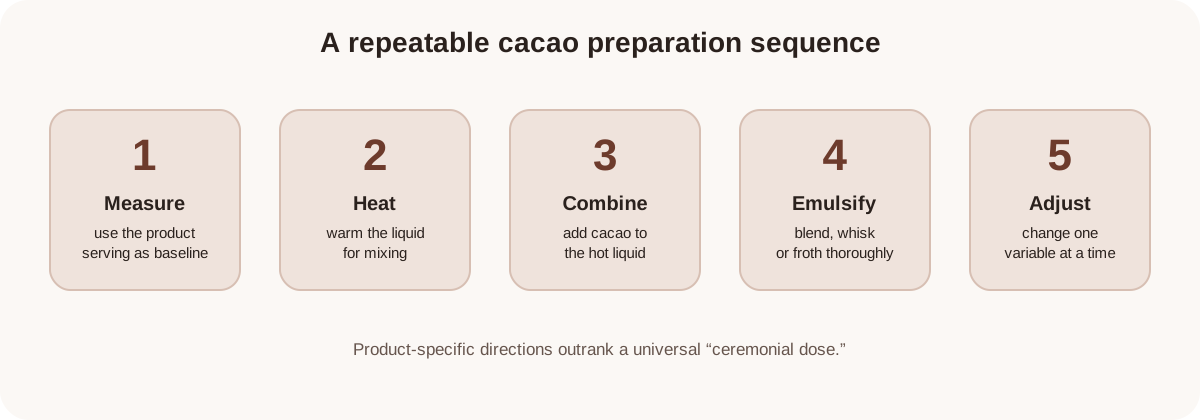
- Read the product first. Check ingredients and the producer's serving guidance. Whole cacao, cacao blends and cocoa powder are not interchangeable gram-for-gram.
- Measure the cacao. A kitchen scale gives more consistent results than spoons or chunks.
- Heat the liquid. Hot water is the simplest baseline. Milk or plant milk changes texture and flavor.
- Combine and emulsify. Blend, froth, whisk or use a traditional mixing tool until the cacao is evenly dispersed.
- Adjust one variable at a time. Change cacao amount, water amount, sweetness or spice after you know the baseline.
Why whole cacao needs vigorous mixing
Whole cacao contains cacao butter. Fat does not simply dissolve in water, so the drink becomes smoother when tiny droplets of cacao butter and fine cacao particles are dispersed throughout the liquid. A blender or frother can create a more stable-feeling emulsion than gentle stirring.
This is also why whole cacao and cocoa powder behave differently. Cocoa powder has typically had a portion of its cacao butter removed. See Cacao Paste vs. Cacao Powder.
Water temperature
You need enough heat to soften or melt the cacao fat and create a pleasant drink, but there is no universal ceremonial temperature. Product instructions, desired drinking temperature and added ingredients all matter. If a producer gives a specific temperature, treat it as guidance for that formulation rather than a law of cacao.
How much cacao?
There is no scientifically standardized “ceremonial dose.” Products vary in fat, added ingredients, methylxanthine content and intended serving size. Start with the manufacturer's labeled serving and adjust conservatively. If you are sensitive to caffeine-like stimulants, remember that cacao naturally contains theobromine and caffeine; see the safety guide.
A real product-specific example
Legacy Cacao's Amazonian Gold preparation instructions currently call for 35 g of its blended whole-cacao product with 6–8 oz of water around 190°F, followed by high-speed blending. That is useful as an example of how one producer specifies its own formulation; it should not be generalized to every ceremonial cacao.
Three preparation profiles
| Profile | How to adjust | Result |
|---|---|---|
| Lighter | More liquid or less cacao | Easier-drinking, lower intensity |
| Rich | Less liquid, thorough emulsification | Dense, chocolate-forward texture |
| Spiced | Add cinnamon, chile, vanilla or another preferred spice | More aromatic; may alter perceived sweetness |
Common problems
The drink is oily
Use more vigorous mixing, make sure the cacao has softened fully, or slightly increase the liquid.
The drink is gritty
Grain size, spice particles and mixing method can all contribute. A blender usually produces a finer texture than a spoon.
The drink is too bitter
Reduce concentration, add a small amount of sweetener, or try aromatic spices. Bitterness is part of cacao, but it does not need to overwhelm the drink.
The drink is too heavy
Reduce the cacao amount rather than assuming every serving should be “ceremonial strength.” A ritual can be meaningful at a smaller serving.
From beverage to ritual
Once the technical preparation is repeatable, ritual becomes a separate choice. You can create a short pause around the drink without adding elaborate rules. Continue with A Simple Daily Cacao Ritual or the broader Cacao Ceremony guide.